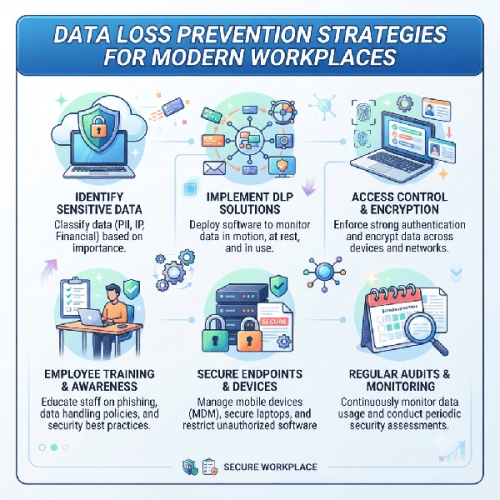
As modern workplaces evolve into hybrid and remote environments, enterprise data is no longer confined to secure corporate perimeters. Employees constantly access, share, and store sensitive assets—such as proprietary code, customer records, and financial statements—across cloud applications, personal devices, and external collaboration channels.
A comprehensive Data Loss Prevention (DLP) strategy secures sensitive information wherever it lives, moves, or is processed, protecting organizations against accidental leaks, insider threats, and malicious exfiltration.
Core Pillars of a Modern DLP Framework
-
Data Discovery & Classification: Automatically discovering and labeling data based on sensitivity levels (e.g., Public, Internal, Confidential, Restricted) using regular expressions, metadata tags, and AI-driven content analysis.
-
Endpoint DLP: Monitoring and restricting unauthorized data movement on employee laptops and mobile devices—blocking actions like unauthorized USB transfers, screen captures, or printing of confidential files.
-
Cloud Access Security Broker (CASB) & SaaS DLP: Securing data stored within cloud environments (such as Microsoft 365, Google Workspace, or Salesforce) by detecting risky file-sharing links, unauthorized app integrations, and shadow IT.
-
Email & Collaboration DLP: Inspecting outbound emails, instant messages (Slack, Microsoft Teams), and video conferencing chat logs to intercept sensitive data before it reaches external recipients.
Step-by-Step Implementation Roadmap
1. Map Data Flows & Identify Crown Jewels: Conduct an inventory to find where critical intellectual property, financial data, and personal identifiable information (PII) reside, and track how data flows across the organization.
2. Define Clear Classification Policies: Establish a straightforward, universally understood data classification taxonomy so that automated DLP tools and employees know how to handle specific file types.
3. Deploy in Audit/Monitor Mode First: Roll out DLP software in a non-blocking "shadow" or monitoring mode to analyze baseline user behavior, identify false positives, and fine-tune policies without disrupting day-to-day productivity.
4. Enforce Context-Aware Controls: Transition to active protection where policies adapt based on user role, device trust state, and location. For example, allow a file to be viewed on a corporate laptop, but block downloading it to an unmanaged personal device.
Foster a Security-First Culture: Pair technical controls with regular employee training on secure sharing practices, phishing recognition, and the proper handling of sensitive data.

krishna
Krishna is an experienced B2B blogger specializing in creating insightful and engaging content for businesses. With a keen understanding of industry trends and a talent for translating complex concepts into relatable narratives, Krishna helps companies build their brand, connect with their audience, and drive growth through compelling storytelling and strategic communication.